
Scientists Pinpoint a Quantitative Trait Locus (THP9) Which Influences Seed Protein Content in Maize
Scientists from Shanghai, Beijing and Tai'an, China and Tucson, Arizona collaborated to investigate the underlying genetics behind the high protein content in teosinte seeds. Teosinte (Zea mays subsp. parviglumis) is the wild ancestor of maize (Z. mays subsp. mays), and its seeds have three times the protein content of the seeds of modern and inbred maize plants. Using trio binning, the researchers created a contiguous haplotype DNA sequence for teosinte. A major high-protein quantitative trait locus, TEOSINTE HIGH PROTEIN 9 (THP9), was subsequently identified on chromosome 9 using map-based cloning. THP9 affects the protein content by encoding an asparagine synthetase 4 enzyme. This is illustrated by the fact that though this enzyme is highly expressed in teosinte, it is not in the B73 inbred. This inbred line has a deletion in the tenth intron of THP9-B73, which causes incorrect splicing of THP9-B73 transcripts. In B73 plants where THP9-teosinte was transgenically expressed, the seed protein was significantly increased. When THP9-teosinte was introgressed into modern maize inbreds and hybrids, there was significantly greater accumulation of free amino acids throughout the plant, especially asparagine. In addition, seed protein content was increased while the yield was unaffected. The authors also note that THP9-teosinte appears to increase nitrogen-use efficiency, which will increase yield in low-nitrogen conditions.
The ancestor of maize originated from the teosinte in South America. It grew like a weed, and the seeds were encased in a hard shell that made it impossible to eat directly. Human ancestors domesticated corn as early as 9,000 years ago, gradually transforming the weedy teosinte into today's corn. The protein content in teosinte grain is up to 30%, compared with ~10% in modern corn, which encourage us to explore the superior genes from teosinte to improve the protein content in corns. Here, we generated a high-quality genome of teosinte that is highly heterozygous and complex through the trio binning strategy of integrating three-generation long-read sequencing technology and HiC three-dimensional physical map. - Dr. Yongrui Wu
Gramene example:
THP9 (also known as asn4, Zm0001eb396990, Zm00001d047736, and GRMZM2G078472) encodes an asparagine synthetase 4 enzyme
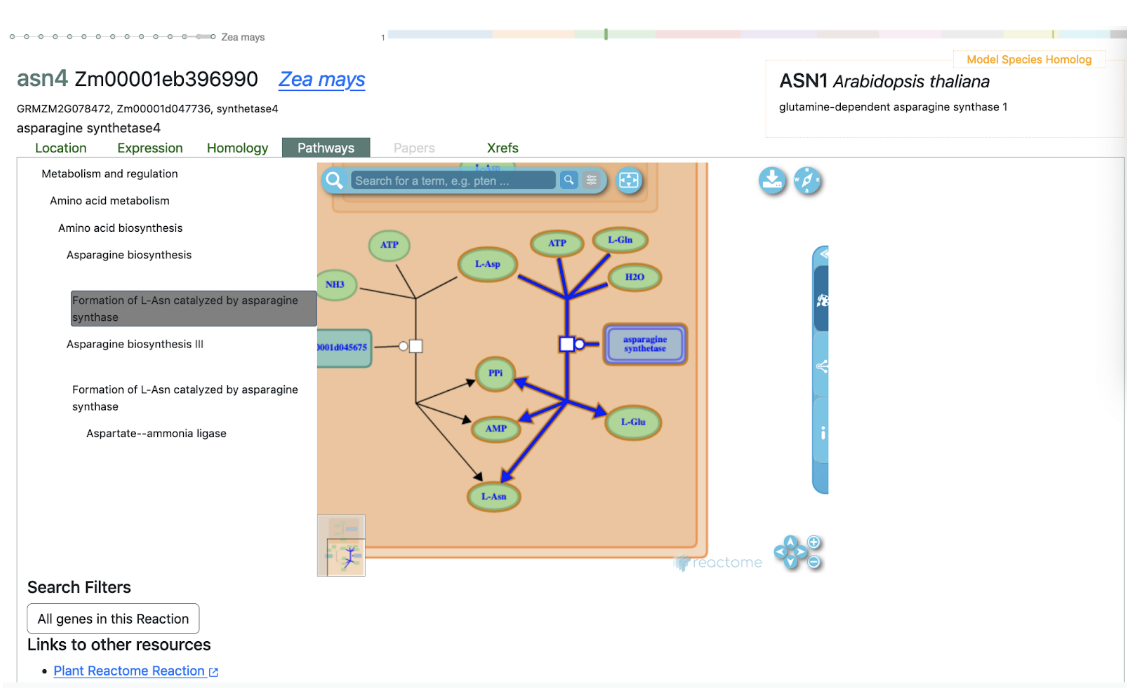
Figure 1: THP9 (also known as asn4, Zm0001eb396990, Zm00001d047736, and GRMZM2G078472) encodes an asparagine synthetase 4 enzyme. Shown above is the Pathways tab of Gramene’s search results where the enzyme catalyzes the formation of L-asparagine in the asparagine biosynthesis pathway.
Reference:
Huang Y, Wang H, Zhu Y, Huang X, Li S, Wu X, Zhao Y, Bao Z, Qin L, Jin Y, Cui Y, Ma G, Xiao Q, Wang Q, Wang J, Yang X, Liu H, Lu X, Larkins BA, Wang W, Wu Y. THP9 enhances seed protein content and nitrogen-use efficiency in maize. Nature. 2022 Nov 16. PMID: 36385527. DOI: 10.1038/s41586-022-05441-2. Read more
Related Project Websites:
Yongrui Wu Webpage: http://sippe.ac.cn/wyr/index.html
Wenqin Wang Webpage: http://pms.shnu.edu.cn/97/65/c26333a759653/page.psp
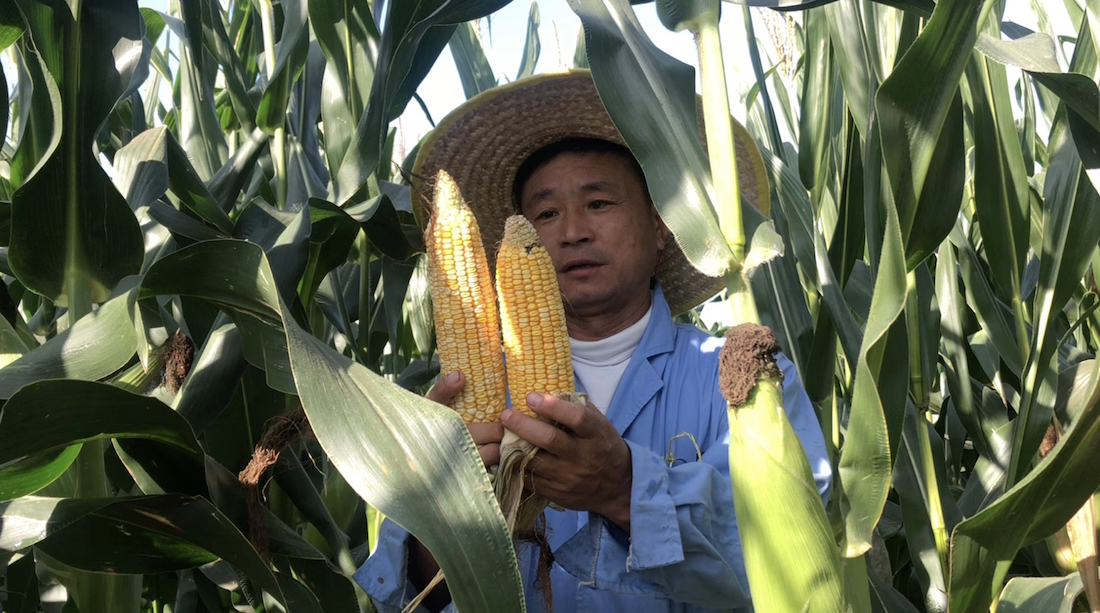
Image 1: Dr. Xiaoduo Lu examining maize hybrids for yield and quality with the high-protein quantitative trait locus. Photo credit Yongrui Wu.
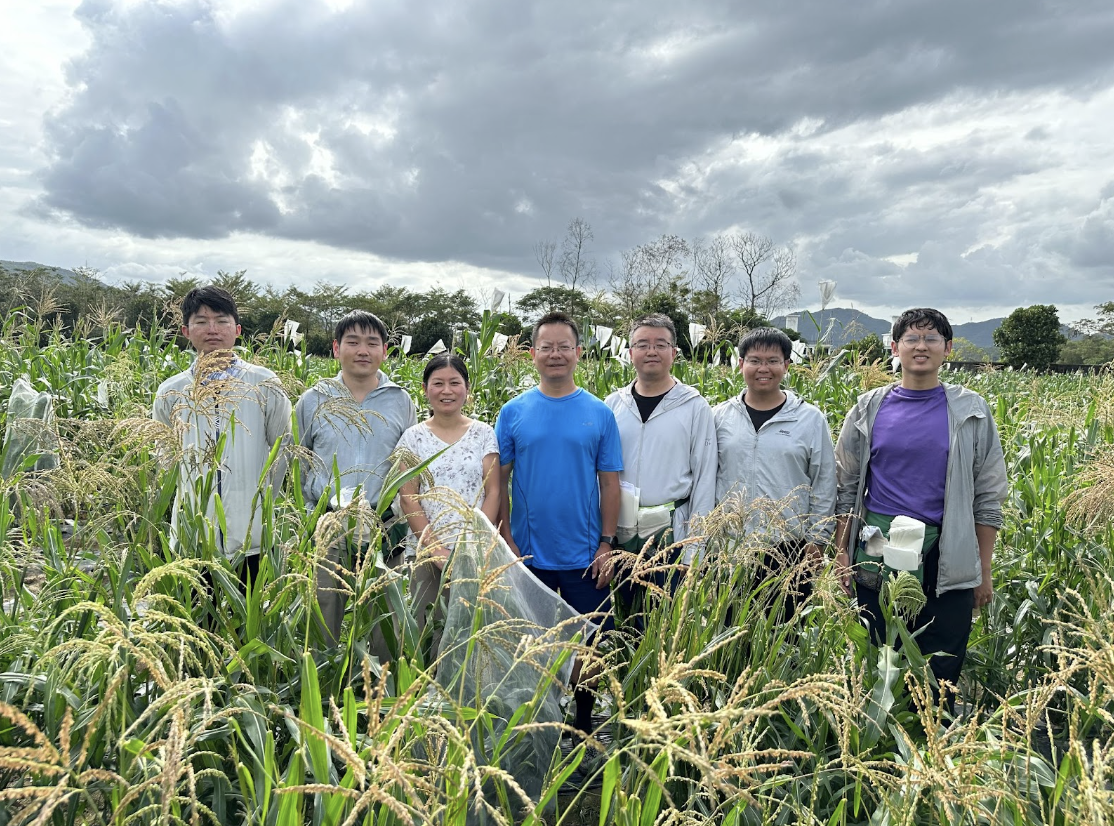
Image 2: The pollination team working on maize genetic population. Photo credit Dr. Yongrui Wu.
- aolson's blog
- Log in to post comments