
Unlocking Plant Secrets One Cell at a Time: Reflections from GRC 2025
by Sunita Kumari, PhD
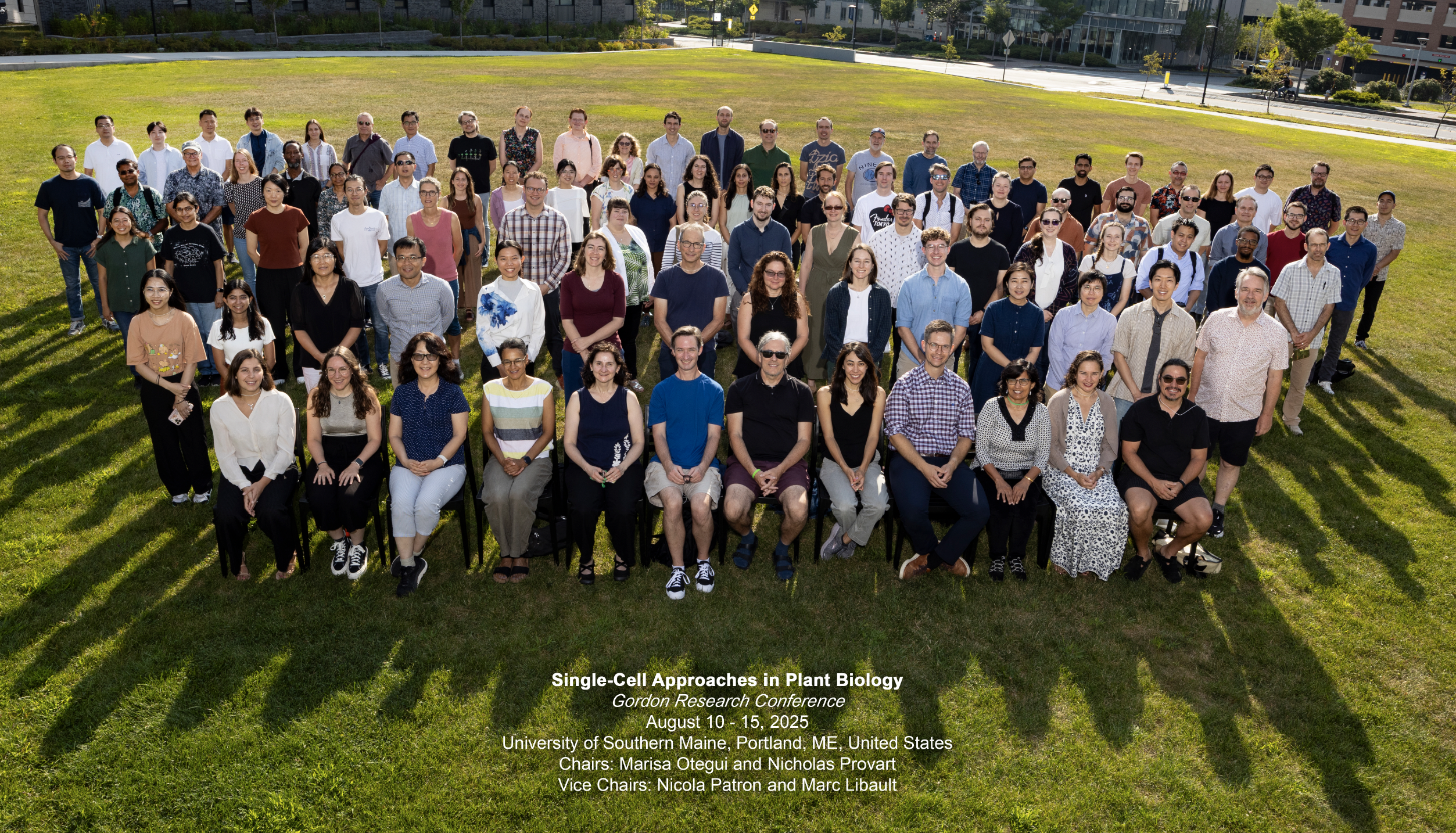
This August, I had the honor of representing the AgBioData Single-Cell Biocuration Working Group at the Gordon Research Conference on "Single-Cell Approaches in Plant Biology" in Portland, Maine. Thanks to the AgBioData Ambassador Award, I joined an incredible community of researchers from August 10-15 to explore how we are revolutionizing plant science by zooming in to the cellular level. Single-cell technologies let us see what individual cells are doing, and the insights are transforming everything from basic biology to crop development.
GRC conferences have a unique vibe. They are all about cutting-edge, unpublished science with plenty of time for deep discussions. Chairs Marisa Otegui and Nicholas Provart, along with vice chairs Nicola Patron and Marc Libault, curated five days of mind-bending presentations that showcased where the field is headed.
Some highlights that blew my mind (without spilling unpublished secrets!):
- Breakthrough applications: Researchers are using single-cell approaches to map complete biosynthetic pathways for crucial compounds like taxol (yes, the cancer drug!), potentially enabling sustainable production without decimating rare tree populations.
- Spatial meets single-cell: The integration of spatial transcriptomics with single-cell sequencing is revealing how genes express themselves in their native tissue neighborhoods—crucial for understanding how plants develop and organize.
- Sustainable agriculture: From engineering nitrogen fixation in crops to understanding root development at unprecedented resolution, this work is laying groundwork for climate-resilient agriculture.
The conference made it clear we are transitioning from "look what this cool technology can do!" to "here is what we are discovering about biology." Key shifts include:
- Getting sophisticated: We have moved from basic protocols to complex multi-modal analyses combining genomics, metabolomics, and spatial data.
- Beyond Arabidopsis: The field is expanding to diverse crops and non-model species—essential for real-world applications.
- From lab to field: Direct translation of single-cell insights into breeding strategies and crop improvement.
Emerging themes that got everyone talking:
- Time matters: Cell states are way more dynamic than we thought. Age-dependent changes happen alongside developmental programs, and we need better time-resolved studies.
- Context is everything: Understanding cell-cell communication, tissue organization, and how microenvironments influence cell fate is crucial.
- Evolution in action: Comparative studies across species are revealing how regulatory networks evolved and how gene duplication shaped plant diversity.
My Contribution: Making Data Work for Everyone
I presented our AgBioData Single-Cell Biocuration Working Group's efforts to build FAIR (Findable, Accessible, Interoperable, and Reusable) workflows for agricultural single-cell data.
Here's the challenge: amazing single-cell datasets are being generated across plant and animal agricultural systems, but without standardized curation and sharing practices, we are not maximizing their potential. Our working group is bringing together stakeholders from AG2PI, FAANG, Plant Cell Atlas, EBI Expression Atlas, and research institutions tackling this head-on.
We have conducted community surveys to identify gaps, convened multi-stakeholder conferences to establish consensus guidelines, and we are building comprehensive, scientist-friendly resources that will accelerate discovery while ensuring data works across species, tissues, and platforms.
The Bottom Line
Plant single-cell biology has matured from proof-of-concept to answering fundamental questions about life. We are moving toward predictive understanding. Imagine being able to engineer developmental outcomes based on molecular knowledge! This isn't science fiction; it's the foundation for sustainable agriculture and solving real-world challenges.
The energy at GRC was infectious. Between formal talks and informal chats over coffee and meals, it was clear this community is driven by curiosity, collaboration, and the conviction that understanding plants at cellular resolution will help feed and treat the world sustainably!
- aolson's blog
- Log in to post comments